

Self Made Tequila Simple Cocktail Recipes for Beginners: 2026 Guide
Table of Contents
- What You'll Need Before You Start Mixing
- Essential Bar Tools for Home Bartenders
- 3 Ingredient Tequila Cocktails Anyone Can Make
- Tequila Cocktail Garnishing Techniques for Beginners
- Troubleshooting: Common Mistakes and How to Fix Them
- Choosing Your Tequila: Budget-Friendly vs. Premium
- Non-Alcoholic Tequila Alternatives and Mocktail Ideas
- Frequently Asked Questions
Last Updated: September 28, 2026
What You'll Need Before You Start Mixing
Simple tequila cocktail recipes for beginners start with three things: good tequila, fresh citrus, and a way to measure, and the best tequila cocktail recipes follow that same rule. Get those right and you can make almost any classic drink. This guide from Self Made Tequila walks through the tools, the recipes, and the fixes for when a drink tastes flat.
Here is the core kit most beginners actually use:
- Tequila (blanco or reposado, 100% agave)
- Fresh limes (not bottled juice)
- Simple syrup (two ingredients, five minutes)
- Kosher salt for rimming
- Ice (more than you think you need)
Essential Bar Tools for Home Bartenders
The essential bar tools for home bartenders are a shaker, a jigger, and a strainer. Everything else is optional. You can spend a lot on gear, but these three do the heavy lifting in nearly every recipe.
The Non-Negotiables: Shaker, Jigger, Strainer
A cocktail shaker chills and dilutes a drink fast. Use a Boston shaker if you can find one. The two-piece design is easier to clean.
Nice-to-Haves That Improve Every Drink
- Muddler for pressing fruit and herbs
- Bar spoon for stirring and layering
- Citrus squeezer for more juice with less effort
- Rimming plate for an even salt edge
None of these are required. But each one shaves time off prep and makes the process cleaner.
3 Ingredient Tequila Cocktails Anyone Can Make
Three ingredient tequila cocktails are the fastest path to a good drink. Fewer parts means less to balance, and less to get wrong. The margarita and the ranch water below are the two best starting points.
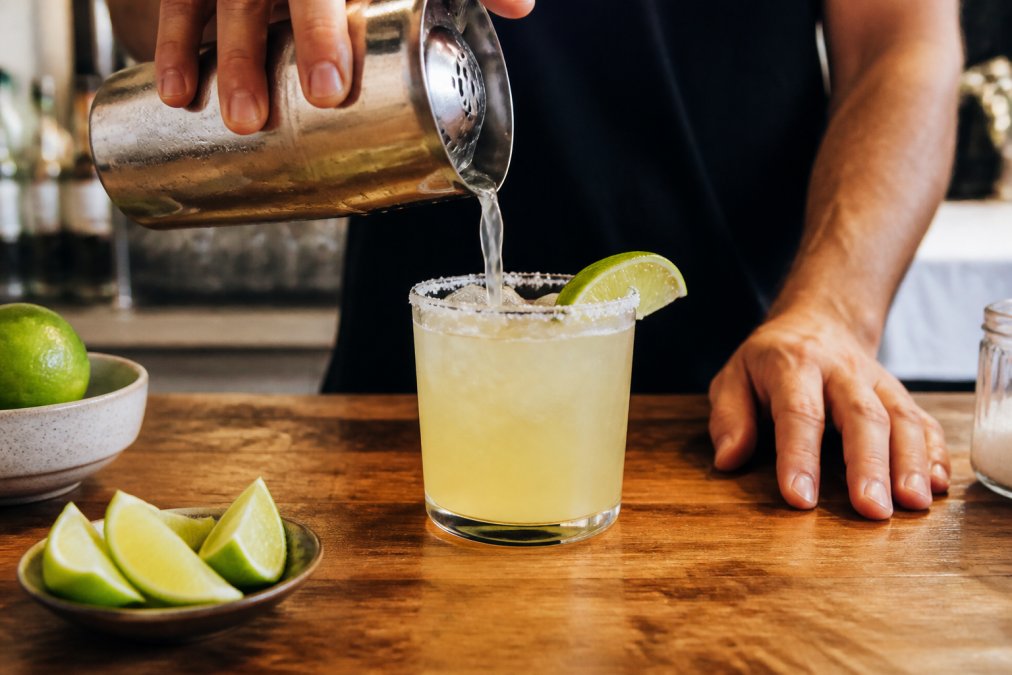
The Classic Margarita (and Why It Works)
The classic margarita is tequila, orange liqueur, and fresh lime juice. That is it. The balance works because the lime cuts the sweetness and the tequila stays forward.
Ingredients:
- 2 oz tequila
- 1 oz orange liqueur
- 1 oz fresh lime juice
Steps:
- Chill your glass and rim it with kosher salt.
- Add all three ingredients to a shaker with ice.
- Shake hard for 12 to 15 seconds.
- Strain into the chilled glass over fresh ice.
Ranch Water and Other Highball Variations
Ranch water is tequila, lime juice, and sparkling mineral water. It is a highball, which means it is built in the glass, not shaken.
- Ranch water: 2 oz tequila, 0.75 oz lime, top with mineral water
- Tequila soda: tequila, soda water, lime wedge
- Paloma-style highball: tequila, grapefruit soda, lime
Tequila Cocktail Garnishing Techniques for Beginners
Tequila cocktail garnishing techniques come down to three moves: the rim, the twist, and the wedge. Each one changes how the drink smells and tastes before the first sip.
Troubleshooting: Common Mistakes and How to Fix Them
Most beginner drinks fail for one of four reasons. Here is the fix for each.
Problem |
Likely Cause |
The Fix |
|---|---|---|
Drink tastes flat |
Old citrus or bottled juice |
Squeeze fresh limes to order |
Too sweet |
Too much syrup or liqueur |
Cut sweetener by a quarter |
Too harsh |
Cheap or low-proof spirit |
Use 100% agave tequila |
Watery |
Not enough ice |
Fill the glass completely |
Other fixes worth knowing:
EXPERIENCE SELF MADE TEQUILA — SHOP NOW →
- Shake vs. stir: shake anything with citrus or syrup; stir clear spirits only.
- Chill your glass: a warm glass kills a cold drink in minutes.
- Measure everything: guessing is the fastest way to an unbalanced cocktail.
Choosing Your Tequila: Budget-Friendly vs. Premium
Budget-friendly and premium tequila differ most in how they are made, not just in price. Both can work in cocktails, but they behave differently once you start mixing. The goal for a beginner is not to buy the most expensive bottle, it is to buy the right bottle for the job you are asking it to do.
The One Label Rule That Matters Most
Look for "100% de agave" or "100% blue agave" on the front of the label. That phrase is the single most useful buying signal for a beginner. If the label says "mixto" or lists no agave percentage, the bottle blends agave with other sugars (often cane or corn syrup), and it will taste thinner and harsher in a cocktail.
Matching the Bottle to the Job
The three main tequila expressions behave differently in a shaker, and picking the wrong one is a common beginner frustration:
- Blanco (unaged, clear): Bright, peppery, and agave-forward. This is the workhorse for margaritas, ranch water, and palomas because its clean flavor cuts through citrus and salt.
- Reposado (rested 2 months to under a year in oak): Rounder and slightly sweeter with a hint of vanilla or caramel. It works in cocktails but also sips well on its own, making it a good "one bottle" pick.
- Añejo (aged 1-3 years) and Extra Añejo (3+ years): Closer to whiskey in character, oak, caramel, dried fruit. These are sipping tequilas. Using them in a margarita is not wrong, but the citrus and sugar will bury the flavors you paid a premium for.
What "Mixing" vs. "Sipping" Actually Means
A useful mental model: a mixing tequila needs to hold its own against lime, sugar, and dilution without turning bitter or disappearing. A sipping tequila needs to taste good on its own, with nothing to hide behind. Many beginners overspend on a sipping bottle and then wonder why their margarita does not taste better. The reverse mistake, buying the cheapest bottle on the shelf, is more common and more damaging, because a harsh spirit stays harsh no matter how well you balance the drink.
A Practical Beginner Buying Strategy
- Start with one 100% agave blanco in the mid-price range. It covers margaritas, ranch water, palomas, and tequila sodas.
- Add a reposado later if you want a bottle that also works neat.
- Skip añejo until you have a reason to sip tequila on its own.
- Read the back label for the NOM number (the distillery ID), the same NOM on two bottles means they came from the same distillery, which is a useful shortcut when comparing brands.
Self Made Tequila is made from 100% blue agave in Tequila, Mexico, with a rich, fruity, and sweet profile. It sips smooth on its own and holds its character in a cocktail, which makes it a strong base for the recipes above.
Non-Alcoholic Tequila Alternatives and Mocktail Ideas
Non-alcoholic tequila alternatives let you keep the ritual without the alcohol. Most are agave-based and built to mimic the peppery, earthy notes of the real thing. But the harder problem for a beginner is not finding a bottle, it is replacing what alcohol actually does in a drink: body, bite, and aroma. Get those three right and a mocktail stops tasting like juice.
What Alcohol Adds (and How to Replace It)
Alcohol contributes three things to a cocktail that a simple juice mix cannot:
- Body and weight: Alcohol has a thicker mouthfeel than water or soda. Replace it with a small amount of agave syrup, honey syrup, or a splash of strong brewed tea (chamomile or green tea works well).
- Bite and warmth: The burn of spirits is part of the experience. A pinch of salt, a few drops of apple cider vinegar, or a dash of ginger syrup mimics that edge without alcohol.
- Aroma: Most of what you taste is smell. A expressed citrus peel or a fresh herb sprig does more for a mocktail than any single ingredient.
Three Mocktail Builds That Actually Work
- Virgin margarita: 1.5 oz fresh lime juice, 1 oz agave syrup, 2 oz sparkling water, pinch of salt. Shake the lime, syrup, and salt with ice, strain over fresh ice, then top with sparkling water. The salt is not optional, it is what makes it read as a margarita rather than limeade.
- Agave lime cooler: 1 oz agave nectar, 1 oz lime juice, 3 oz club soda, grapefruit peel expressed over the top. Build in the glass over ice.
- Grapefruit fizz: 2 oz fresh grapefruit juice, 0.5 oz lime juice, 0.5 oz simple syrup, top with soda water. Add a rosemary sprig for aroma if you have one.
Using Non-Alcoholic Tequila
If you want to use a bottled non-alcoholic tequila alternative, treat it like a flavored syrup rather than a spirit. Most are less concentrated than real tequila, so you may need to reduce your sweetener by a quarter to keep the drink from going flat. Taste the alternative neat first, if it tastes sweet on its own, cut the agave syrup in the recipe.
Hosting Tip: The Equal-Glass Rule
For hosts, a mocktail version of your main drink means everyone at the table gets the same glass. That small detail matters more than most people expect. Build the mocktail first, set it aside, then make the alcoholic version, that way the non-drinker is not waiting while everyone else drinks.
Frequently Asked Questions
What is best to mix with tequila for a beginner?
Fresh lime juice and a touch of simple syrup are the easiest mixers for beginners. These two ingredients balance tequila's natural agave sweetness with bright citrus. For a two-ingredient drink, try tequila and grapefruit soda over ice. Always use fresh lime juice rather than bottled, and start with a 2:1 ratio of tequila to lime, then adjust to taste.
Do I need special bar tools to make tequila cocktails at home?
No. A shaker, jigger, and strainer cover most beginner recipes. A jigger ensures consistent measurements, while a strainer keeps ice out of your glass. If you don't have a shaker, a mason jar works for shaking. For stirred drinks like ranch water, you only need a spoon. Invest in tools gradually as you try more recipes.
What are some simple tequila drinks with only two ingredients?
Two-ingredient tequila drinks include tequila and grapefruit soda (often called a Paloma), tequila and ginger beer, or tequila and fresh lime juice. For a drier option, mix tequila with sparkling water and a squeeze of lime. These drinks rely on quality tequila, so choose a 100% blue agave bottle for the smoothest flavor.
How do I garnish a tequila cocktail without fancy tools?
A simple lime wedge or wheel is the easiest garnish. Run a lime wedge around the rim of your glass, then dip it in kosher salt for a classic margarita rim. For a twist, use a vegetable peeler to create a citrus peel. No special tools are required. Always garnish just before serving to keep it fresh.
Mixing a great drink at home comes down to a few basics: good tequila, fresh citrus, and the right amount of ice. Get those right and you can make any of these recipes with confidence. Self Made Tequila is crafted in Tequila, Mexico from 100% blue agave, with a smooth, refined profile that works neat or in a cocktail. It brings bold, smooth character and a clean finish to every glass you build. Experience Self Made Tequila and make your next pour one worth remembering.